Miami-Dade & Broward · 24/7
Floor Safe Opening & Repair
A floor safe cannot be carried anywhere, so every job happens on your floor. It sits in concrete at the lowest point of the room, which is exactly why moisture is its worst enemy.
Answered by Yossi, 24/7 · Registered & insured · Mobile service
Updated
In short
Floor safe service is opening and repairing safes set into a concrete floor, usually under carpet, a rug or a closet floor. You need it when the combination is lost, the dial has corroded or seized, the door is stuck, or water has got in. Safe Tech Locksmith works on floor safes in place, nothing is dug out, and the lock is repaired or replaced once the door is open.
Floor safes are the safes people forget about. They sit under a rug, a closet floor or a mat behind the counter, opened once a month or once a decade, until the day the dial will not turn or nobody remembers the numbers. Safe Tech Locksmith opens and repairs in-floor safes where they are set, in homes and businesses within about 20 miles of Sunny Isles Beach.
How floor safes are built
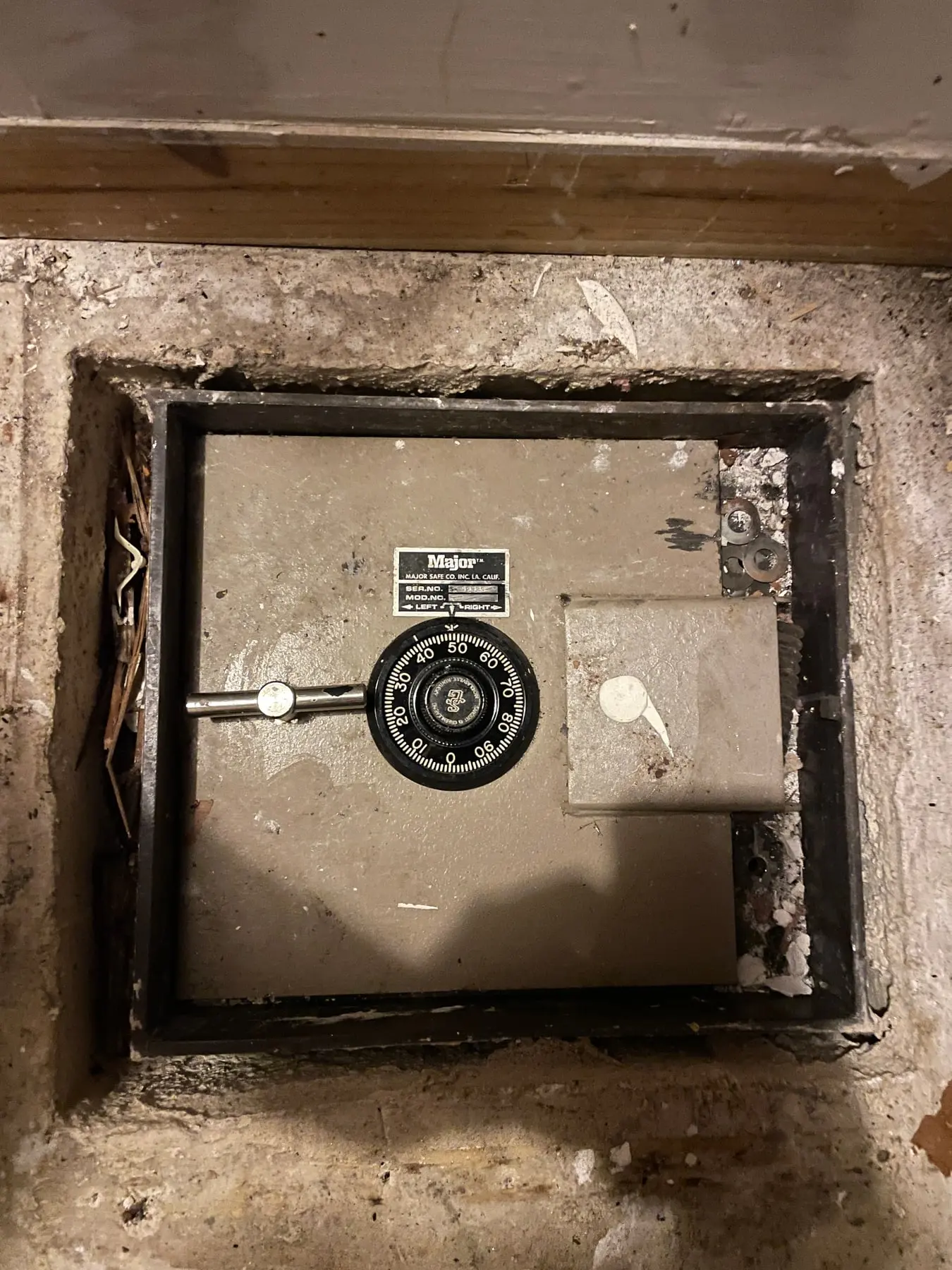
An in-floor safe is a steel body set into a concrete slab, with only the door showing, flush with the floor. Dean Safe’s installation guide puts it simply: the more reinforced concrete around the safe, the greater the security. That is the whole point. A floor safe cannot be pried out or carried off without breaking up the floor.
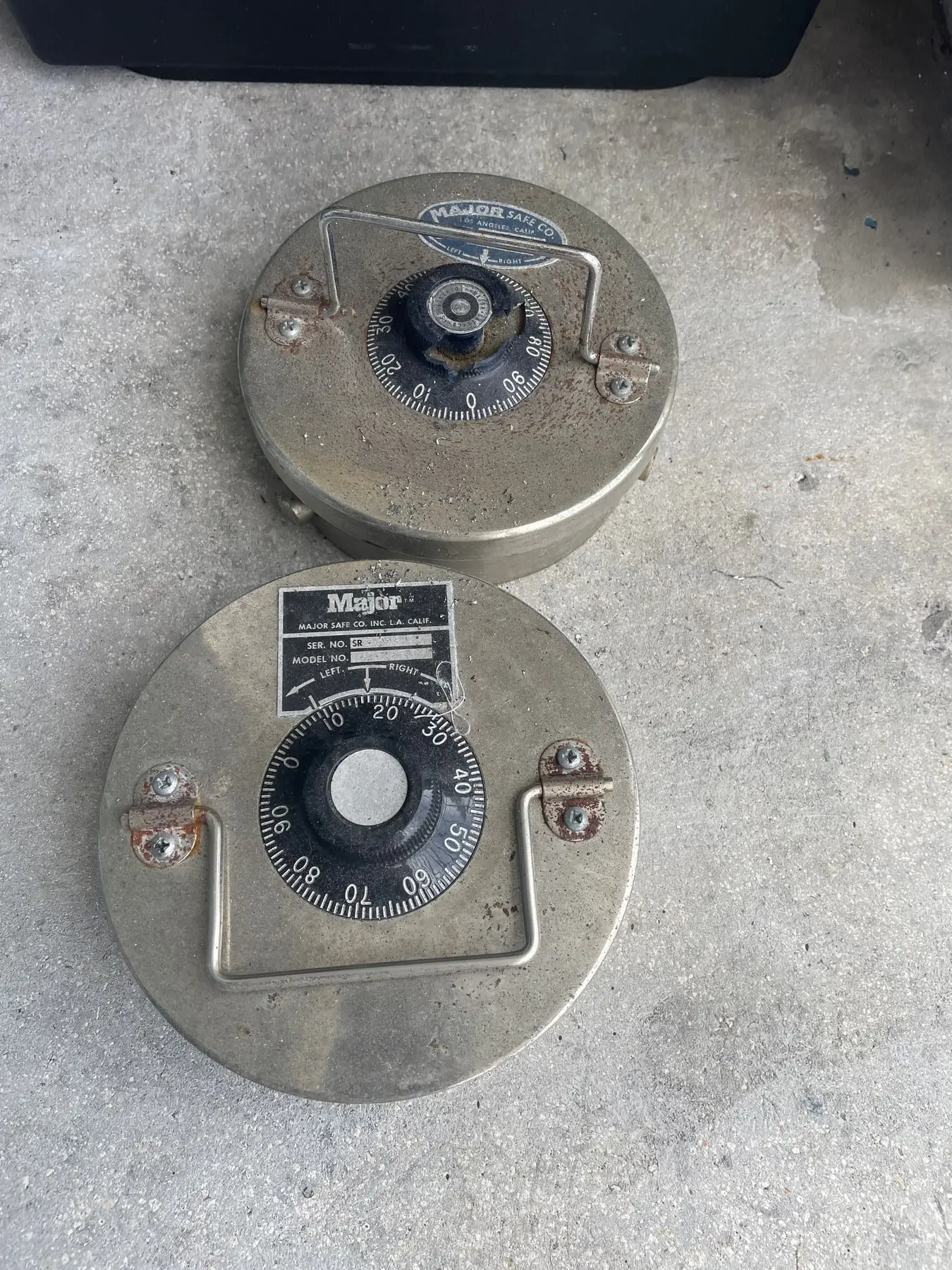
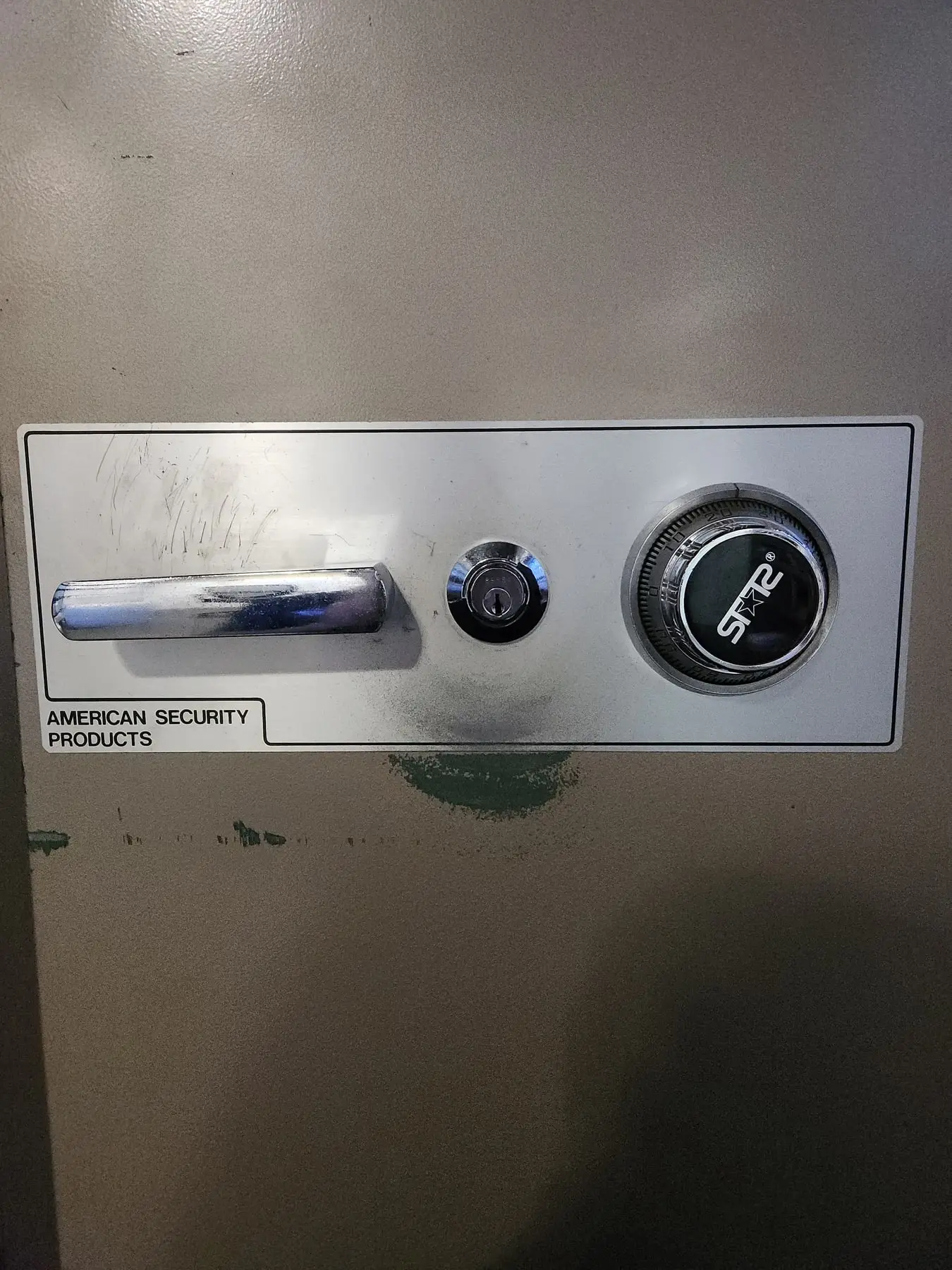
Doors come in round and square shapes. On many of them the door does not swing on a hinge. Once unlocked, it lifts out of the neck of the safe entirely, as on American Security’s round-door STAR models and the Major doors in the photos on this page. A dust cover usually sits over the door, and some safes add a drop slot so cash can go in without the door being opened.
Why floor safes fail
Moisture and grit cause most floor safe problems. Concrete holds moisture, the safe sits at the lowest point of the room, and every time the cover comes off, dust and debris fall around the dial and the door. Over the years that means:
- Dials that stiffen, grind or seize.
- Doors that unlock but stay stuck in the neck.
- Corrosion on the lock and the bolts.
- Water inside after a leak, a flood or a mopped floor.
Covers are often water-resistant, not waterproof, and dealers commonly advise keeping valuables in sealed bags inside. In a humid climate that advice is worth following. The guide to safe care in South Florida covers moisture control in more detail.
Opening a floor safe
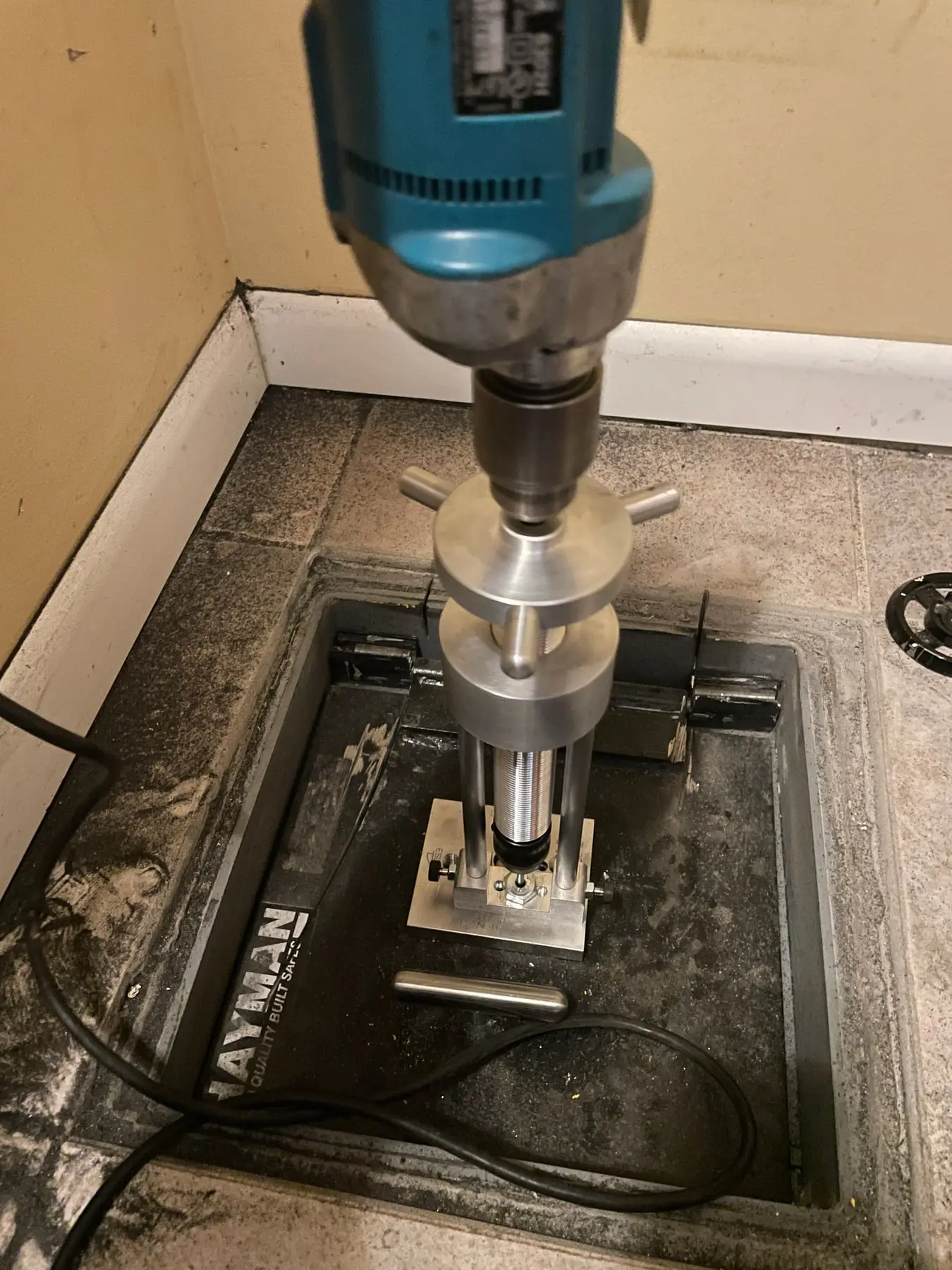
Every floor safe opening happens on the floor, from above. The least invasive method that suits the lock comes first. When drilling is needed, a rig is set on the door and one small hole is made, then repaired once the door is out, as described in will a locksmith drill my safe?. The concrete is not touched. The general process is the same as any safe opening, with more time spent cleaning out the neck and dial.
If the safe came with a house you bought, bring proof that you own the property. The guide to a locked safe in a new house covers what to gather.
Floor safes at businesses
Some restaurants, shops and gas stations keep a floor safe as a drop safe, or as a second safe out of sight. Dials on these see daily use and wear out faster. When a manager leaves, the combination should change, which is a combination change once the safe is open. For drop and front-loading safes above the floor, see depository safes, and for everything else at a business, commercial safe service.
Rather hand it to a professional?Call or text Yossi, 24/7. A photo of the safe gets you a quote.
In detail
Floor safe problems
Lost combinations
Floor safes that came with the house or the business premises, installed long before anyone there now.
Corroded or seized dials
Dials that turn stiffly, grind or will not turn at all after years of moisture rising from the slab and grit falling in.
Stuck doors
Round and square doors that unlock but will not lift out of the neck because of rust, grit or debris packed around them.
Water inside the safe
Safes that flooded, took on mop water or collected condensation. Opened, dried out and the lock assessed.
Drop-slot floor safes
Business floor safes with a deposit slot for cash drops, under counters and back-office floors.
Dial and lock replacement
Worn dials and locks replaced on round-door safes such as Major and on square-door units, with the safe left in the floor.
From the job log
Real jobs like yours
Get a quote
Send a photo. Get a price.
A photo of the door, the lock and any labels tells Yossi most of what he needs. You get a real number before anyone drives out.
- You deal with Yossi directly, not a call center.
- Quoted before the work starts.
- Registered and insured. Mobile service, 24/7.
In a hurry? It is quicker to call.
Questions
Floor safes: what people ask
Do you have to break up the concrete to open a floor safe?
No. A floor safe is opened through its door, from above, the same way you use it. The concrete stays where it is. The only time a floor safe comes out of the slab is when it is being removed for good, and that is a job for a contractor, not a locksmith.
Why is my floor safe dial so hard to turn?
Usually moisture or grit. A floor safe sits at the lowest point of the room, set in a slab that can hold moisture, and dirt falls around the dial every time the cover comes off. Do not force the dial with tools. A dial that will not turn smoothly can stop at the wrong numbers or break, and then the job becomes an opening.
Is a floor safe waterproof?
Usually not. Many floor safe covers are water-resistant rather than waterproof. Dealers of American Security's round-door floor safes, for example, describe a water-resistant dust cover and still recommend sealed bags for anything water could damage. Dean Safe's installation guide advises keeping floor safes away from plumbing lines for the same reason.
The floor safe came with the house and nobody knows the combination. What do I need?
Proof that you own the property, such as the deed or closing documents, plus ID. If the previous owner is reachable, ask them first, because they may still have the combination or the paperwork from the installer. The guide on finding a locked safe in a new house covers what else to gather.
Can the combination on a floor safe be changed?
Yes. Once the door is open, the dial lock can be set to a new combination or replaced, and the door is tested before it goes back into the floor. On lift-out doors, that work is done with the door out of the neck, right there on site.
Guides
Read before you call
How Do I Care for a Safe in South Florida Heat, Humidity and Salt Air?
Humidity control, battery schedules, hurricane prep and what to do with a flooded safe, based on what the manufacturers recommend.
Read the guideOwning a safeFound a Locked Safe in Your New House? Whose It Is and How to Get In
A locked safe came with the house or condo. Whose it is, who to ask for the combination, and what a locksmith needs before opening it.
Read the guideHiring a safe technicianWill a Locksmith Have to Drill My Safe?
Not always. When a safe gets drilled, why, and what it looks like afterwards.
Read the guideAlso available
Related services
Safe Opening & Lockouts
Lost combination, dead keypad, jammed bolt work. Opened on-site and put back in service.
DetailsCommercial & Business Safes
Drop, depository, floor, jewelry and office safes for stores, restaurants and offices. Opened, repaired and re-coded on-site.
DetailsDepository & Drop Safe Service
Drop and deposit safes for stores, restaurants and offices. Lockouts, lost keys and code changes after staff turnover.
DetailsSafe Combination & Code Changes
A new combination on a mechanical dial or a new code on an electronic lock, set on-site and tested with the door open.
DetailsWhere floor safes is available
Locked out right now?
Call or text a photo of the safe or lock. You get a straight answer and a real price before anyone drives out.