Guide · Troubleshooting
Right Code, but the Safe Handle Won't Turn
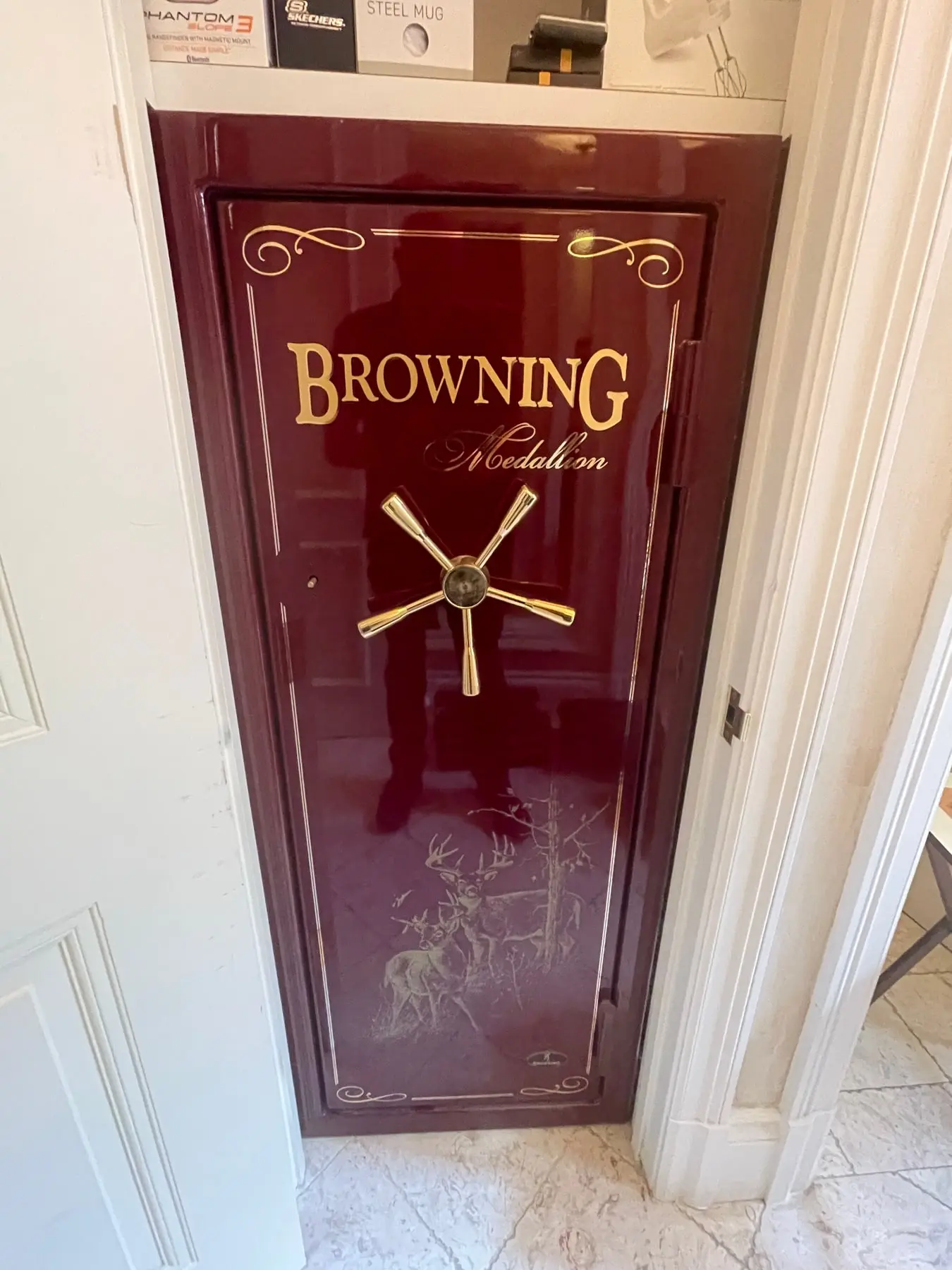
Short answer
If the lock seems to open but the safe handle will not turn, the usual cause is pressure: the bolt work leaning on the lock bolt, or something inside pushing against the door. Set the handle where your manual says before entering the code, then turn it within the lock's open window. If light hand pressure does not work, stop. Forcing the handle can break parts or fire a relocker.
- Most stuck handles are a pressure problem, not a broken lock: the bolt work is loaded against the lock bolt or the door is pushed from inside.
- Set the handle in the position your manual gives before entering the code, then turn it within a few seconds.
- On a dial lock, the final turn must reach the dial's stop before the handle will move.
- Never hammer, pry or put your weight on the handle. Relockers are built to lock the bolt work in place under exactly that treatment.
- If the handle moves farther once the lock opens but the door still stays shut, a relocker may have fired and the safe needs a technician.
Locked out right now?Call or text Yossi, 24/7. A photo of the safe gets you a quote.
You entered the right code and heard the lock, or you dialed the combination and felt the dial stop. The handle still will not move. It helps to know what is actually holding the door, because the fix depends on it.
What is the lock actually doing?
The lock does not hold the door shut by itself. The big bolts that slide into the frame, called the bolt work, do that, and the handle drives them. The lock’s job is to block the bolt work with its own small bolt. When you enter the code, the lock pulls that small bolt out of the way, and the handle can then retract the big bolts.
That sequence is where things go wrong. AmSec describes it in its instructions for the ESL10XL: when the bolt work presses on the lock’s bolt, the lock’s solenoid can only overcome so much resistance, and if the resistance is too great, the bolt does not retract. The lock has done its part. The pressure on it is the problem.
Why won’t the handle turn when the code is right?
The common causes, roughly in order:
- Bolt pressure. The handle was left partway, so the bolt work is resting on the lock bolt. A door adjusted too tight does the same thing. Liberty notes that over-tightened door adjusters make the handle hard to turn.
- Something pushing on the door. A rifle barrel, a shelf that slid forward, a box against the inside of the door. Liberty lists out-of-place shelves and items too big for the shelves as causes of bolt pressure.
- Missing the window. Electronic locks only stay open briefly. Liberty gives 6 seconds on its SecuRam locks, and AmSec gives 3 seconds on the ESL10XL. Then the lock relocks.
- The dial was not turned to its stop. On a dial lock, the last turn to the right retracts the lock bolt. Liberty says to make sure the dial has completely stopped, at about 87 on its safes, before you turn the handle.
- Packaging on a new safe. Liberty warns that the foam corner protectors shipped with a new safe can put pressure on the locking bolts.
- A real failure. A broken part in the lock, bolt work that has come apart, or a relocker that has fired.
What can you safely try?
These steps come from the manufacturers’ own owner instructions. Use light hand pressure only.
For an electronic lock:
- Before entering the code, move the handle where your manual says. Liberty says to center it between its stops on its SecuRam locks, and to move it to the fully locked position to take side pressure off the lock bolt. AmSec says to turn it all the way in the locking direction.
- Enter the code once, carefully, and turn the handle right away.
- If the lock has opened and the handle still feels loaded, Liberty suggests pushing in on the door while you turn the handle, which takes the pressure of the contents or packaging off the bolts.
For a dial lock, redial the whole combination slowly and make the final right turn until the dial comes to a firm stop before you touch the handle. Our guide on how to dial a safe combination walks through it. If the keypad beeps but you never hear the lock open, start with a safe keypad that beeps but will not open instead.
How do you tell bolt pressure from a real failure?
A few signs point to something beyond pressure:
- The lock opens sometimes and fresh batteries help for a while. AmSec says this usually means a binding condition in the bolt work that should be corrected, not batteries draining unusually fast.
- The handle moves farther after the lock opens, but the door still will not open. Sargent & Greenleaf’s troubleshooting guide says a relock device is probably engaged, and that the service of a trained safe technician should be used.
- The handle turns but nothing moves. On Liberty safes, the manual has you check the set screw in the handle hub for tightness. If that is not it, the connection between the handle and the bolt work may have failed.
- Grinding, a handle that feels different than it used to, or visible damage. Stop there.
When should you stop?
Stop as soon as positioning the handle and a couple of careful attempts change nothing. Do not hang on the handle, hit it, or slip a bar through a spoked handle for leverage. Safes are fitted with relockers that lock the bolt work in place when the safe is attacked. S&G’s lock guide describes relocking features built into its locks that trigger when the lock is attacked. Once a relocker fires, a simple job becomes a much longer one.
If you see pry marks, a crooked dial or a damaged keypad, treat it as a break-in attempt and read what to do after a safe break-in attempt before anyone touches it.
Yossi works out whether the lock or the bolt work is at fault, and many of these are opened without drilling. Once the door is open, the real cause gets fixed: bolt work freed and adjusted, a door set back to the right tension, or a worn lock replaced. That is safe repair, and you test the safe yourself with the door open before he leaves. Afterwards, AmSec’s advice is worth keeping: once you find the handle position that leaves the lock free, make a habit of leaving the handle there.
Tried all that and still stuck?Call or text Yossi, 24/7. A photo of the safe gets you a quote.
Common follow-up questions
Why does my safe handle turn a little and then stop?
Most safe handles have a little play even when locked. The firm stop is the bolt work meeting the lock bolt. If the lock has opened and the handle still stops partway, the bolts may be caught. Liberty's manual suggests gently working the handle back and forth until they release, then wiping the locking bolts with a light oil once the door is open. If light hand pressure does not release them, stop.
My safe handle now points in a different direction. Is it broken?
Not necessarily. Liberty builds a clutch into its handles that slips when the handle is forced, and says to turn it back to its original position when the safe is locked. A slipped clutch is a sign that someone used more force than the handle is meant to take. Other brands are built differently, so check your manual.
The safe finally opened, but now the door won't close or lock. What should I do?
Do not close a door that is not working right. Liberty's checklist is a good start: make sure the bolts are fully retracted before closing, push the shelves all the way back, press the floorboard down, and check that the handle travels the same distance with the door open as it does with the door closed. If it still binds, have it looked at while the door is open.
Could someone have tampered with my safe?
If you see pry marks, a loose or crooked dial, a damaged keypad or scratches around the handle, treat it as a break-in attempt. Stop trying to open it, call the police, and photograph everything before any repair. Our guide on what to do after a safe break-in attempt explains the next steps.
Sources
- Liberty Safe Owner Use and Care Manual (Rev. 3.1.18)
- ESL10XL Electronic Lock Operating Instructions (American Security Products Co.)
- Model 6120, 6121 Motorized Electronic Combination Locks Troubleshooting Guide (Sargent & Greenleaf, hosted by Liberty Safe)
- Sargent and Greenleaf Mechanical Safe Lock Guide (Models 6730, 6735, 6738, 6741)
General information, not legal or insurance advice. Lock behavior varies by model, so check the manual for yours.