Miami-Dade & Broward · 24/7
Lock Installation, Replacement & Repair
A good lock on a badly fitted door is a weak lock. Installation is about the bolt, the strike and the frame as much as the hardware in the box.
Answered by Yossi, 24/7 · Registered & insured · Mobile service
Updated
In short
Lock installation covers fitting new door locks and deadbolts, replacing worn or damaged ones, and repairing locks that stick, bind or fail to latch, including keypad deadbolts. Safe Tech Locksmith does this on-site for homes and businesses in Miami-Dade and Broward and quotes the job before work starts. A photo of the door edge and the current lock gets the most accurate quote.
Safe Tech Locksmith installs, replaces and repairs door locks for houses, condos and businesses within about 20 miles of Sunny Isles Beach. The work is done at your door, quoted before it starts, and tested with you before Yossi leaves.
Install, replace or repair
Installation means fitting a lock where there was none, most often adding a deadbolt to a door that only has a knob or lever, or putting a keypad deadbolt on a door you use every day.
Replacement is for hardware that has reached the end: a cylinder that fights the key, a finish corroded by salt air, a lock damaged in a break-in attempt, or light-duty hardware you want to step up from. If the only issue is who has keys, you may not need new locks at all; rekeying keeps the hardware and changes the key. Our guide on rekeying versus replacing helps you decide.
Repair covers locks that still work, just badly. Deadbolts that bind, latches that do not catch and handles that have worked loose are often a matter of alignment and adjustment rather than new parts.
What the grades tell you
Door locks sold in the United States are often graded under standards from BHMA, the Builders Hardware Manufacturers Association. Commercial-style grades run 1 to 3, with Grade 1 the toughest. Under ANSI/BHMA A156.36, a Grade 1 deadlock has to survive 250,000 opening and closing cycles and a strength test that loads the door against the bolt with 1,350 pounds of force.
Residential deadbolts have their own standard, ANSI/BHMA A156.40, which grades each lock A, B or C separately for durability, for strength and security, and for finish. The finish grade matters on the coast: it is tested with salt spray under ASTM B117.
BHMA itself points out that lab results are not the whole story. Real-world performance depends on installation, maintenance, the environment and how the door and frame are built. A high-grade deadbolt with a strike held on by short screws in a soft jamb is not a high-grade installation.
Keypad deadbolts
Keypad deadbolts let you stop carrying a key and give codes to family, cleaners or staff. Before choosing one, check how it is powered and how it warns you of a low battery, since both vary by model. Most keep a key cylinder as a backup; some keyless models do not. When one is installed, your own codes are set and the backup key is tested with the door open.
Keypad locks on safes are a different job. If the keypad that has failed is on a safe, see safe keypad replacement.
Fitting the door you have
Most residential locks are made for a standard door preparation: a 2-1/8 inch hole through the face of the door, set 2-3/8 or 2-3/4 inches back from the edge. When the new lock matches the old holes, it is a straight swap. When it does not, the door needs work, and you will hear that in the quote.
Many exterior doors in South Florida are impact-rated, and their product approvals can list the hardware they were tested with. If you want a different style of lock on an impact door, check the door’s approval or ask its manufacturer before you buy anything.
For more on locks at home, see home and condo locksmith service. For stores, offices and warehouses, see commercial locksmith service.
Rather hand it to a professional?Call or text Yossi, 24/7. A photo of the safe gets you a quote.
In detail
Lock work on doors
New deadbolts
A deadbolt added where there was only a knob or lever, or a second lock on a door that needs one.
Replacing worn or damaged locks
Cylinders that fight the key, finishes eaten by salt air, and hardware damaged in a break-in attempt.
Keypad deadbolts
Keypad locks fitted to standard doors and tested with the door open, with the backup key and your own codes working before the job is done.
Lock repair
Deadbolts that bind, latches that do not catch, loose handles and strikes that no longer line up with the bolt.
Stepping up a grade
Light-duty builder hardware swapped for locks made to a higher ANSI/BHMA grade.
Business doors
Commercial-grade locks and deadbolts for offices, stockrooms and back doors that see heavy daily use.
From the job log
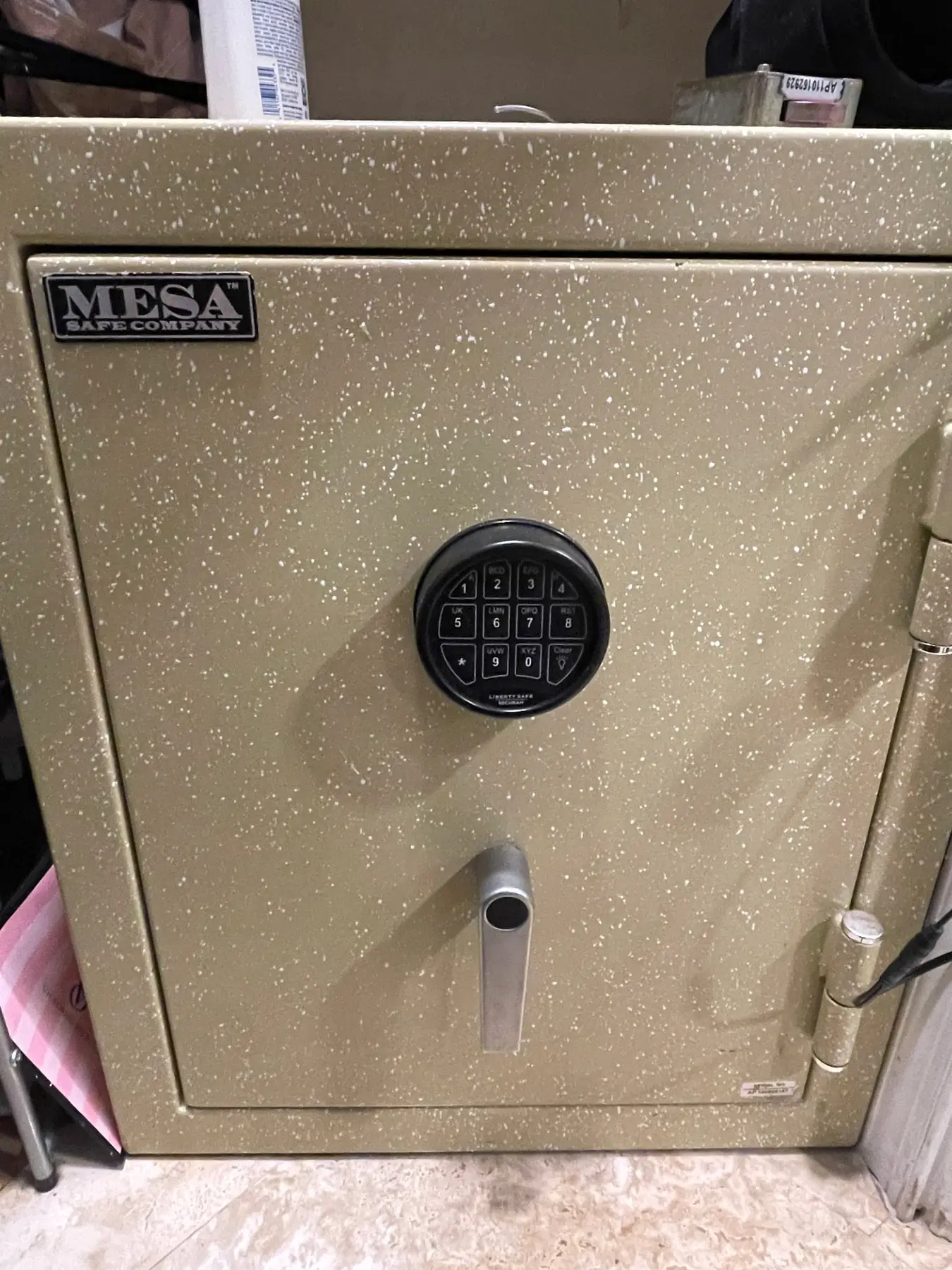
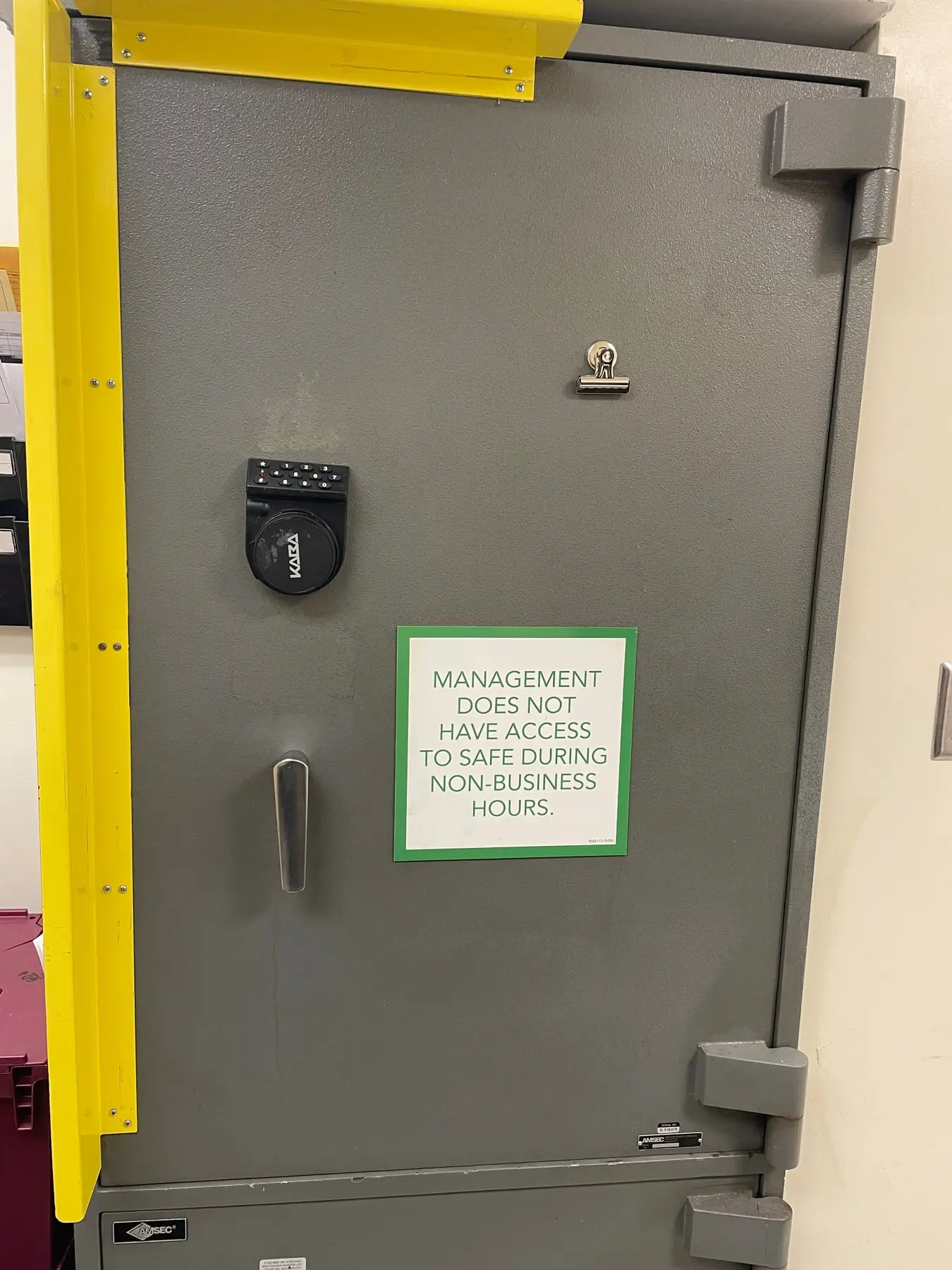
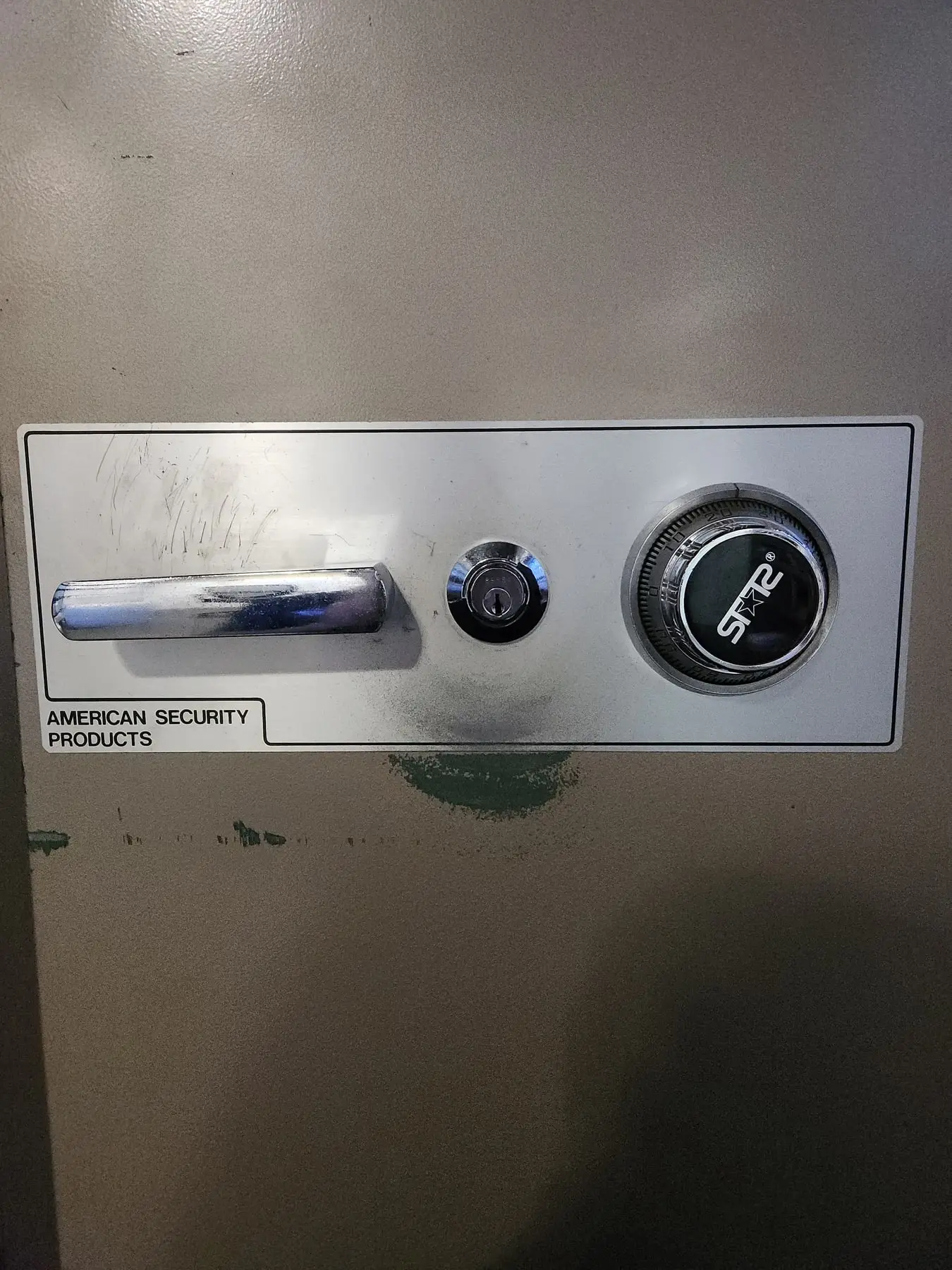
The safe side of the job log
Most of the photos Yossi takes are of safes. The same person works on your door locks.
Get a quote
Send a photo. Get a price.
A photo of the door, the lock and any labels tells Yossi most of what he needs. You get a real number before anyone drives out.
- You deal with Yossi directly, not a call center.
- Quoted before the work starts.
- Registered and insured. Mobile service, 24/7.
In a hurry? It is quicker to call.
Questions
Lock installation: what people ask
What does ANSI Grade 1, 2 or 3 mean on a lock package?
They are performance grades from BHMA standards, with Grade 1 the heaviest duty and Grade 3 the lightest. A higher grade means the lock passed harder tests for strength and for how many times it can be worked before it wears out. Residential deadbolts can also be graded A, B or C under A156.40, with A the highest.
Will a new deadbolt fit the holes already in my door?
Usually, if both are standard. Most residential deadbolts are made for a 2-1/8 inch hole through the door face, with the lock centered 2-3/8 or 2-3/4 inches from the door edge. Older doors, commercial doors and some imported hardware differ. A photo of the door edge and the current lock shows whether the new one drops in or the door needs work first.
What should I check before choosing a keypad deadbolt?
Three things. How it is powered, since battery type, battery life and low-battery warnings vary by model. Whether it keeps a key cylinder as a backup, which most do and some keyless models do not. And its grade. Near the ocean, look at the finish too; salt air is hard on hardware.
My deadbolt only locks if I push or lift the door. Does it need replacing?
Often not. A deadbolt that turns easily with the door open but binds with it closed is usually rubbing on the strike because the door or frame has shifted. That is an alignment repair, not a new lock. Do not force the key, because a bent or snapped key turns an annoyance into a lockout.
Does the door frame really matter?
Yes. BHMA notes that real-world lock performance can differ from lab results depending on installation, maintenance, environment and how the door and frame are built. A deadbolt only holds as well as the strike and the wood or metal behind it, which is why the strike side of the door gets as much attention as the lock.
Guides
Read before you call
Should I Rekey or Replace My Door Locks?
Rekeying makes old keys useless and keeps your hardware. Replacing makes sense when the locks are worn, weak or the wrong kind for the door.
Read the guideHiring a safe technicianHow Do I Check a Locksmith in Miami-Dade or Broward?
Licensing rules changed in 2025. What to check before you let a locksmith work on your door or safe, and the signs of a scam.
Read the guideAlso available
Related services
Lock Rekeying for Homes & Businesses
New keys for the locks you already have, so old keys stop working. For new homes, lost keys and turnover.
DetailsResidential Locksmith for Homes & Condos
House and condo lockouts, rekeying, lock repair and new locks, from the same person who opens your safe.
DetailsCommercial Locksmith for Businesses
Storefront, office and warehouse lockouts, rekeying after staff changes, and lock repair or replacement.
DetailsSafe Keypad & Electronic Lock Replacement
Failed safe keypads and electronic locks replaced on-site, plus dial-to-keypad and keypad-to-dial conversions.
DetailsWhere lock installation is available
Locked out right now?
Call or text a photo of the safe or lock. You get a straight answer and a real price before anyone drives out.