Guide · Troubleshooting
How to Dial a Safe Combination Correctly
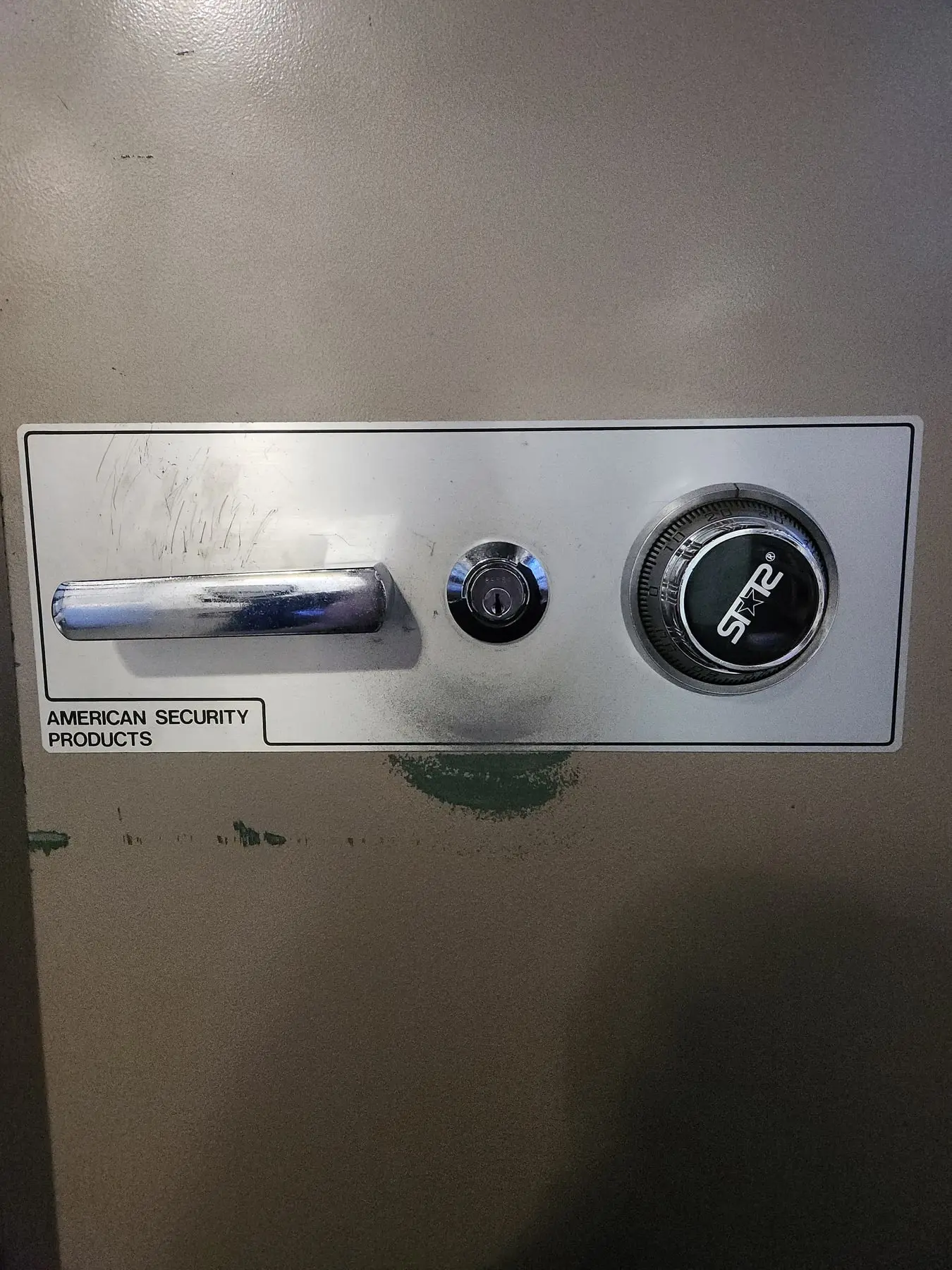
Short answer
To dial a standard three-number safe combination, turn the dial left (counterclockwise) and stop on the first number the fourth time it reaches the index mark. Turn right, stopping on the second number the third time. Turn left, stopping on the third number the second time. Then turn right slowly until the dial stops. If you overshoot any number, even slightly, start again from the beginning.
- Left means counterclockwise and right means clockwise, as you face the dial.
- The standard sequence is left to the first number the fourth time, right to the second the third time, left to the third the second time, then right until the dial stops.
- If you pass a number even slightly, do not back up. Start the whole sequence again.
- Dial slowly, look straight at the index mark at the top of the dial ring, and never force the dial.
- Where the dial stops at the end depends on the lock: about 95 on an S&G 6730, about 87 on many Liberty safes.
Locked out right now?Call or text Yossi, 24/7. A photo of the safe gets you a quote.
Step by step
Unlock the dial if it has a key
If there is a small keyhole in the dial, it is a key-locking dial, and it will not turn until you unlock it. On Liberty safes the key turns half a turn clockwise to unlock.
Find the opening index
Use the mark at the top (12 o'clock) of the dial ring. Some dials have a second mark slightly to the left; that one is only for changing the combination. Position yourself so you look at the dial straight on.
First number: left, stop the fourth time
Turn the dial left (counterclockwise). Count each time the first number lines up with the index mark. Stop exactly on it the fourth time.
Second number: right, stop the third time
Turn the dial right (clockwise). Pass the second number twice and stop exactly on it the third time.
Third number: left, stop the second time
Turn the dial left. Pass the third number once and stop exactly on it the second time.
Turn right until the dial stops
Turn slowly to the right until the dial comes to a firm stop. That stop is the lock bolt pulling back. It is near 95 on an S&G 6730 and near 87 on many Liberty safes. Then turn the handle.
If it does not stop, start over
If the dial keeps turning, or you overshot a number on the way, do not back up. Begin again from the first number with four full turns to the left.
Lock it when you close the safe
Close the door, turn the handle to throw the bolts, then turn the dial at least four full turns to scramble it. Try the handle to make sure it is locked.
Plenty of safes that seem to have a lost or broken combination have neither. The numbers are right and the lock is fine. The problem is the dialing. A mechanical combination lock is precise on purpose, and it only opens when each number is set exactly, in the right direction, with the right number of turns.
Before you start
Have the combination written down in front of you, in order. Good light helps, and so does getting your eyes level with the dial. Sargent & Greenleaf’s first dialing tip is to always view the dial straight on, because looking at it from an angle makes a number appear lined up when it is not.
Find the opening index, the mark at the top of the dial ring. On S&G locks there may be a second mark a little to the left. That one is the changing index, and S&G says it is used only when setting a new combination. Dialing to it is a common way to “lose” a perfectly good combination.
If your dial has a keyhole, unlock it first. On Liberty safes the key only locks the dial so it cannot turn. It does not open the safe by itself.
Why do the turn counts matter?
Inside a typical safe lock there is one wheel for each number in the combination. Each full turn of the dial picks up one more wheel and carries it along. That is why the first number gets four passes, the second three and the third two: each wheel is set in turn without disturbing the ones already set. S&G notes it is normal to feel slightly more resistance with each full turn as another wheel joins in.
It is also why you cannot back up. If you pass the number you meant to stop on, turning back the other way does not put that wheel where it belongs. S&G is blunt about it: you cannot back up to a number you passed, so start the entire procedure again from the very beginning. Liberty says the same, even if you go past by only half a number.
How do you know it worked?
After the third number, turn the dial slowly to the right. When everything is set correctly, the dial comes to a firm stop as the lock bolt pulls back. Where it stops depends on the lock. S&G says its 6730 stops at approximately 95. Liberty’s instructions say the dial on its safes stops at about 87, with some resistance felt near 95 on the way.
Once the dial has stopped, turn the handle. If the handle will not move even though the dial stopped, the bolt work may be pressing on the lock. Our guide to a safe handle that will not turn covers that.
Common dialing mistakes
- Overshooting and backing up. Even half a number past counts as a miss. Start over.
- Miscounting turns. Each time the number passes under the index counts as one, even if you started close to it.
- Using the changing index instead of the opening index at the top.
- Reading the dial at an angle. Get level with it.
- Spinning the dial fast. Liberty warns that spinning the dial rapidly back and forth can damage the lock. Turn slowly and steadily.
- Forcing a stiff dial. S&G says never to force the dial. If it will not turn with light to moderate pressure, the lock needs service.
- Trying the handle too early. On a dial lock, the handle only works after the final turn reaches the stop.
When should you stop and call?
Give it three or four careful, slow attempts. If it still will not open, more attempts will not help, and something else is going on. Call if:
- The dial wobbles, feels loose in its ring, or spins without ever stopping.
- The dial ring moves when you grip it. S&G explains that a shifted ring changes where the numbers line up.
- The dial is stiff, gritty or getting harder to turn. That is a lock asking for service, which Yossi does as part of safe lock repair.
- The combination was changed recently and has never worked since.
- You are not sure the numbers you have are the current combination. See forgot your safe combination? for the options.
Two habits prevent most of this. After any combination change, S&G says to try the new combination at least three times with the door open before you close it. And have a dial lock serviced about once a year, more often in humid air. If you want a new combination set, that is a combination change, done with the door open and tested before anything is closed. If you are tired of dialing altogether, dial versus electronic locks compares the two honestly.
Tried all that and still stuck?Call or text Yossi, 24/7. A photo of the safe gets you a quote.
Common follow-up questions
Why won't my safe open when I know the combination is right?
Misdialing is the usual reason. Sargent & Greenleaf's guide to its dial locks says a very high percentage of lockouts come from improper dialing: overshooting a number, using the wrong index mark, or reading the dial at an angle. Redial slowly, counting carefully. If the dial ring itself moves when you grip it, stop and call. S&G notes that a dial ring that has shifted changes where the numbers line up, and that needs a technician.
Is it left-right-left on every safe?
On most three-number safe locks, yes. A four-number lock is different: S&G's procedure for its four-wheel locks starts to the right and stops on the first number the fifth time. If your combination came with written instructions, follow them.
How tight should the dial feel?
It should turn smoothly with light hand pressure. S&G says it is normal to feel a little more resistance with each full turn, because each turn picks up another part of the mechanism. A dial that will not turn with light to moderate pressure, S&G says, means the lock is already open or needs service. Never force it.
Does a dial lock need maintenance?
Yes. S&G recommends having combination safe locks serviced by a qualified safe technician once a year, and more often in hostile conditions such as high humidity. Liberty gives the same yearly advice for the dial locks on its safes. In South Florida, that matters.
Can I change my dial combination myself?
It takes a special change key, the current combination and a careful procedure, and a mistake can lock you out. Liberty says changing a dial combination is a job for a locksmith, and that an owner doing it voids the lock part of the warranty on its safes. Have it done professionally.
Sources
- Sargent and Greenleaf Mechanical Safe Lock Guide (Models 6730, 6735, 6738, 6741)
- Liberty Safe Owner Use and Care Manual (Rev. 3.1.18)
General information, not legal or insurance advice. Lock behavior varies by model, so check the manual for yours.